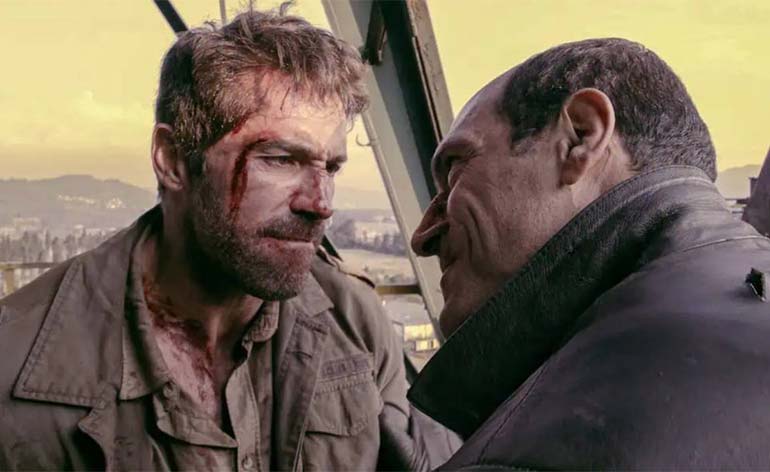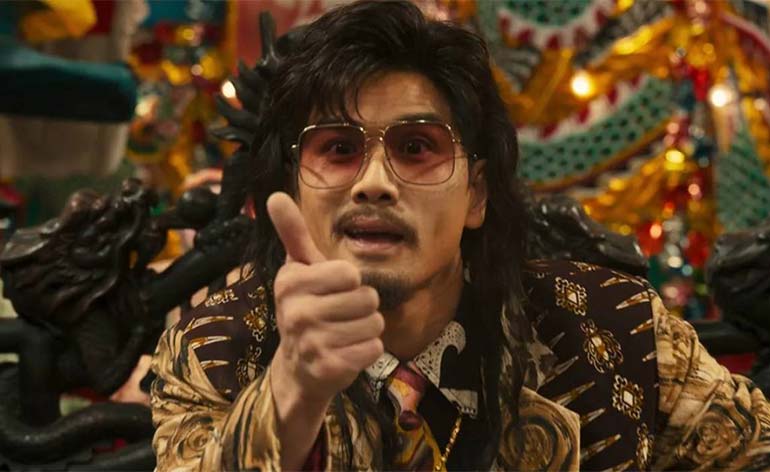
The gargantuan box office success of the 2024 Hong Kong martial arts film “Twilight of the Warriors: Walled In” is testimony to many things, among them the importance of Kowloon Walled City to the history of Hong Kong as well as the eternally thunderous power and popularity of Hong Kong action movies. In the case of “Twilight of the Warriors”, the ensemble cast of the film each tackle larger-than-life characters, with Philip Ng’s Wong Gau, or “King”, having the time of his life as near-invincible villain whose fists are as much a challenge for the concrete walls of Kowloon Walled City to handle as they are for his enemies.
Based upon Yuyi’s novel “City of Darkness” along with the eponymous manhua by Andy Seto, “Twilight of the Warriors: Walled In” follows refugee Chan Lok-kwan (Raymond Lam) as he begins to build a new life inside of Kowloon Walled City in the 1980s, only to find himself caught in a turbulent gang war. While Chan runs afoul of many enemies in Kowloon, Phil’s Wong Gau is the animated, off-the-chain villainous heavy-hitter of “Twilight of the Warriors”. With the movie becoming a monster hit in Asia and enjoying widespread critical and audience acclaim, Phil’s portrayal of Wong Gau as well as his fast-paced, energetic fight scenes have also been spotlighted as one of the highlights of “Twilight of the Warriors”, and quite deservedly so!
Today, Philip sits down with KFK to discuss the making of 2024’s big Hong Kong hit “Twilight of the Warriors”, his role in the movie as the principal antagonist Wong Gau, along with some other projects he has in the works, including the upcoming ensemble martial arts film “Without Remorse”!
Hi Phil, welcome back to Kung Fu Kingdom! Hope you’re doing well and congratulations on the success of “Twilight of the Warriors”!
I’m doing great, thanks Brad!
Awesome! Well, let’s dive right into the making of “Twilight of the Warriors”! How did you come aboard the film?
I was called in during pre-production by the line producer, who told me that the director Soi Cheang wanted to meet with me. I was very happy to oblige since I’ve been a big fan of his for a long time and I really like the way he creates his stories and handles his characters. So, I was looking forward to meeting with him, and when we met the first time, I wasn’t offered the role yet.
He told me that he was getting ready to film a Hong Kong kung fu action film to be shot locally, and he was looking for kung fu actors from Hong Kong, and actually, it was a short list. So, he called me in to talk, and after about the third meeting, he officially offered me the role of Wong Gau, or “King” as they translate that in English. He told me that it was an antagonist role, and it’s something that would be very different from what I’ve done previously, and even the audience might not recognize me after I put on my costume. Being a big fan of his, I was very excited to see what direction he was going to take this story in and my character, and I signed on.


So, what can you share about playing the villain of “Twilight of the Warriors”, Wong Gau a.k.a. King?
Wong Gau is a character who is vastly different from any other character that I’ve played in the past. Everything he does is kind of extreme, from his demeanor to his choice of clothing and even his style of kung fu is so extreme that it basically makes him impervious to any and all physical damage, which makes him a very tough opponent for our four protagonists and serves as a very big obstacle for them to reach their goals through their journey in this movie. This is a great role to play, I got to play around with different mannerisms and things that I wouldn’t have thought to do, so I have to thank the director for working with me to create this character who seems to be pretty well received here in Asia!
Yes, Wong Gau is definitely one of the highlights of “Twilight of the Warriors”! And on that note, how was tackling the villain role of Wong Gau different for you compared to other projects you’re well known for like “Once Upon A Time in Shanghai” or “Birth of the Dragon”?
The main difference is that I’m playing the main antagonist in this movie as opposed to the main protagonist like in past movies like those, and just the fact that I’m playing the antagonist allows me to make decisions when I’m designing the character that I wouldn’t if I was the protagonist.
As the protagonist, there’s certain things that you have to do to protect the character, whereas when you’re the antagonist, you have a lot more leeway to exaggerate your performance and bring out characteristics and/or magnify characteristics that you normally wouldn’t. The real challenge is to maintain a balance as to make the character fantastical, but still grounded to a level where he’s still understandable and relatable in a human realm.
I really credit the director for helping me find that balance when designing the character, and overall, I think we were very successful in creating this character, he seems to be very well received, and he’s definitely one of the most fun characters I’ve ever played in my career!
And it definitely shows! Looking ahead now, “Twilight of the Warriors” has quite the ensemble cast of Hong Kong stars like Louis Koo, Sammo Hung, Raymond Lam, and Aaron Kwok. What can you share about the experience of making “Twilight of the Warriors” with such a large ensemble cast?
It was great working with all these talents. I’ve worked with many of them before, and it was great seeing them again and working with them again, especially with someone like Sammo Hung.
It was the first time for me working with Raymond Lam, and he’s a great actor, very experienced and very hard-working, and most importantly, he’s a very, very good guy. We became really good friends after this shoot. Making a movie of this magnitude, and especially an action movie of this scale, it’s almost like fighting a battle, so we ended up being like war buddies.
It’s also the first time I’ve worked with Richie Ren, and he’s an excellent, excellent person. It was really great working with him and getting to know him, and even though we didn’t have a lot of screentime together, it was always a pleasure. Being part of an ensemble cast like this is great, and especially when everyone brings their A-game and makes this movie as good as it is now, so it was a pleasure and a privilege.
So, what would you say is your favorite action scene in “Twilight of the Warriors”?
A lot of people point to the final fight scene in the movie where the four heroes go against my character Wong Gau. That’s a very spectacular scene and it really stands out in the movie, and everyone involved worked really hard on it and we spent a lot of time filming it.
One scene in particular I find very effective and which I really enjoy is the opening scene on the bus where I chase after Raymond Lam’s character Chan Lok-kwan and I fight him from outside the bus to all the way inside the bus. The reason I really like that scene is it was a really good opening for my character and a good introduction for him.
When we filmed that scene, we filmed it near the end of principal photography, so we were already very familiar with Wong Gau as a character and how to portray him. Using that as an intro scene for my character really sets the tone for him for the rest of the movie, so I really enjoyed filming that scene and it came out really good, and that’s probably one of my favourite action scenes I was involved in.


Related to that, what would you say was the hardest stunt or action scene in the making of “Twilight of the Warriors”?
I believe the scene that everyone spent the most time on was the ending fight scene between the four heroes and Wong Gau. We shot that for over two weeks, I think it was about 20 days, and each day was quite long, no less than 15 hours each day. There’s a lot involved in that scene, there’s wire-work, there’s stylized kung fu, there’s a lot of work with different props, and a lot of physicality between all of us for that scene. That was probably the hardest physically for all of us, in terms of endurance and just pushing ourselves to the limit.
I actually passed out during the filming of that scene! (laughs) When my character gets stabbed, I have to put on kind of a wincing expression, and I put a lot of energy into wincing. After I did that, after a few takes, I think my brain was lacking oxygen a bit, and I passed out during one of the takes. What I remember when I came to was everyone was looking at me and Raymond made a joke, he asked me if I was doing method acting (laughs). There were no major injuries, but it was definitely very physically demanding for all of us.


So, what would you say is your favorite memory from the making of “Twilight of the Warriors”?
The entire process of the making of this movie was a joy, from my initial meeting with the director to costuming, principal photography, all the way to pick-ups and ADR, the whole process was a joy. I think that’s mainly because of the people who were involved, all the creatives and cast members, everyone there put their heart out and worked as hard as they could to make something great, and just being in that environment was pure joy.
Making this movie, every aspect of it was great, but some of my favourite memories were in between takes. A lot of time, the actors will take a break and relax in the make-up room. We don’t have trailers in Hong Kong, so we’d hang out in the make-up room, and I often chose to sit next to the monitor stand with the director, with Kenji [Tanigaki], with the screenwriter, and just enjoy the moment and the process of seeing the way they worked and just those conversations we had by the monitor.
Those were some of the best memories I’ve had in making movies for a while. It was a great experience, and like I said, it’s mainly due to all the people involved and it was pure joy.
Speaking of that, Kenji Tanigaki oversaw the action in “Twilight of the Warriors”, and he’s frequently been described as a successor to Yuen Woo-ping among Hong Kong action directors, such as with his upcoming ensemble martial arts film “The Furious”. Working with Kenji on “Twilight of the Warriors”, do you see him going on to push martial arts filmmaking to similar heights as the legendary Yuen Woo-ping?
Yes, Kenji is one of the greatest action directors working today. I love his action design, and what I love about him is he took the foundation of Hong Kong kung fu action moviemaking and added his own cultural spin on it and made it his own style. We can really see an example of this in the “Rurouni Kenshin” series he did. The action there is familiar yet brand new, and is testament to the style that he helped create.
He brought a lot of that style to “Twilight of the Warriors” and it’s very distinctive. He’s a big kung fu nerd like myself, and I remember making jokes with him on the set and reciting lines from old movies like “Kickboxer”! Even the other stuntmen didn’t know what we were talking about, so our bond is strong, not only through our mutual work on the movie, but just our mutual love of action movies from around the world. He’s great, I can see him going nowhere but up in this industry, and it was a privilege and a pleasure to be able to work with him on this movie.
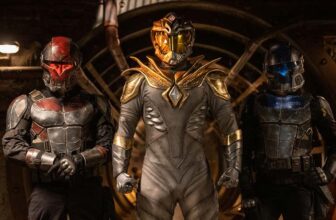
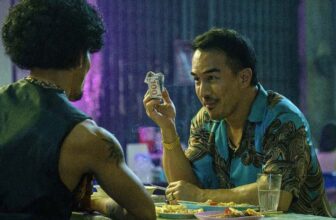
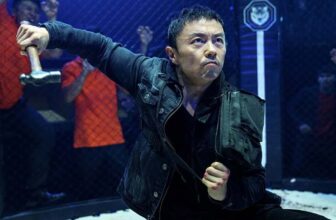
Looking at some future projects now, you’ll also be seen in another Hong Kong ensemble martial arts film, “Without Remorse”, in which you appear with such other martial arts stars as Andy On and Tiger Chen. What can you share about how “Without Remorse” came about and the making of the movie?
My production partner Philip Lui (Koon-Nam) and I started a production workshop back in 2019, and we were trying to sell movies to different production companies and investors. It was difficult during that time because of COVID, but as 2022 came along, the market started getting better and I was making movies for other companies, and I started making the rounds and getting to know different people who might be interested in investing in our movies.
We were able to sell three projects, one of which was “Without Remorse”. It was a pretty tough shoot, and it was a mid-budget film, nowhere near “Twilight of the Warriors” budget. Principal photography lasted about a month, we shot a lot of fight scenes, and it was good working with Andy again, and we didn’t skip a beat. A lot of times when Andy and I do fight scenes, usually it’s one or two takes and we get it because we’ve been doing this for a while.


It was also really good working with Tiger Chen, I haven’t worked with him since we were both stuntmen! So, it was really good to catch up with him and have some on-screen battles with him. He’s also an excellent and professional action actor, a few takes and we get a really good one. We also had the excellent Sammy Hung in it, and I had a very crazy, violent fight scene with him, and it turned out really, really good, I think we were all very satisfied with it. We’re in the process of doing post-production on “Without Remorse” right now.
That sounds great, we really look forward to seeing “Without Remorse”! Well, as we prepare to sign off Phil, what other projects do you have in the works after the release of “Twilight of the Warriors” and “Without Remorse”?
I have a few other projects in pre-production that my production partner and I are getting the scripts ready for, so lots to come and I’m very excited about all of these projects!
That all sounds very exciting Phil! Thank you so much for the privilege of speaking again today on “Twilight of the Warriors” and “Without Remorse”! We look forward to hearing about your upcoming action projects this year and beyond! Keep in touch Phil, xie xie!
Awesome, thanks for having me again on Kung Fu Kingdom, Brad!