A student trains diligently for years, drilling forms and conditioning the body through hours of repetition every week, and still wonders why strikes never seem to carry the same snap and power as a more senior practitioner’s. Technique gets blamed first, and rightly so to a point, but the physical raw material behind a powerful strike matters just as much as the mechanics delivering it. Muscle does not build and repair itself on discipline alone.
Traditional martial arts culture has historically treated nutrition as almost separate from training itself, something addressed through general healthy eating advice rather than the same precision applied to stance work or breathing technique. This gap has started closing as more schools incorporate modern strength and conditioning principles, but plenty of dedicated practitioners still train hard for years without ever examining whether their diet actually supports the muscle development their training is asking for.
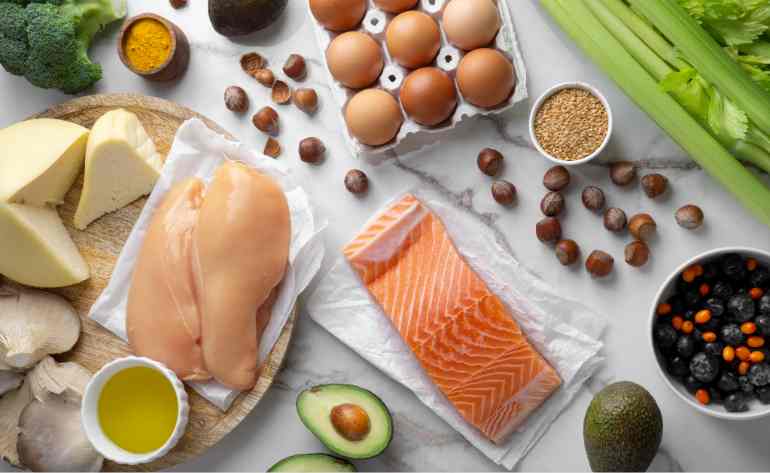
Muscle development requires more than time under tension and repetition alone. Protein provides the amino acid building blocks muscle tissue actually needs to repair and grow stronger following the repeated stress of forms practice, conditioning drills, and sparring, and a practitioner falling short on protein intake is quite literally asking his body to build strength from insufficient raw material.
This gap tends to go unnoticed precisely because martial arts training already produces real strength gains even with imperfect nutrition, just not as much or as quickly as it otherwise could. A practitioner improving steadily has no obvious signal that he is leaving progress on the table, since there is no missed workout or skipped class to point to as the visible cause.
This nutritional gap shows up clearly once training volume increases, whether preparing for a grading, a tournament, or simply intensifying a personal practice. A shake built around fast digesting whey protein gives the body quick access to amino acids for muscle repair after a demanding training session, a practical way to close a daily protein gap that whole food alone often does not cover during a heavy training block. Many practitioners now build this kind of supplementation directly into a post-training routine rather than leaving protein intake to whatever happens to be available that evening.
The connection between adequate protein and genuine strength development is not a modern fitness industry invention layered onto traditional practice. It reflects basic physiology that applies just as much to a martial artist conditioning his body through forms and striking drills as it does to any other athlete building strength through repeated, progressive physical stress.
The research supporting this connection is substantial and well established. A large meta-analysis published in the British Journal of Sports Medicine pooled data from 49 randomised trials and roughly 1,863 participants and found that protein supplementation produced measurable gains in lean mass and strength when combined with resistance-style training. The researchers identified a daily intake of around 1.6 grams per kilogram of body weight as the point past which additional protein stopped producing extra benefit in the pooled data, a target that becomes considerably harder to hit through whole food alone once training volume climbs during an intensive practice period.
Timing matters less than most practitioners assume, contrary to the popular idea that protein needs to arrive within some narrow window immediately after training to count. Total daily intake, spread reasonably across several meals rather than loaded entirely into one, matters considerably more than hitting a precise post-training minute for anyone outside of elite competitive athletics.
Age changes this equation in ways worth understanding honestly, since older practitioners generally need more deliberate attention to protein intake than younger ones to maintain the same muscle mass and recovery capacity. A martial artist in his fifties or sixties training seriously benefits from treating protein intake with real precision rather than assuming the same casual approach that worked at twenty five still applies decades later.
This matters considerably for a discipline where many of the most respected instructors and practitioners continue training seriously well into older age, since maintaining strength and power output across decades requires actively countering the natural muscle loss that comes with aging rather than simply hoping technique alone compensates for it. The instructors who move powerfully into their sixties and seventies are rarely doing so through technique alone.
Sparring and heavy conditioning days place particularly high demands on this recovery process, since these sessions produce more muscle damage than a typical forms practice and therefore require proportionally more raw material to repair fully before the next hard session. A practitioner who trains hard several times a week without matching nutritional support is essentially asking for compounding fatigue rather than compounding strength, a pattern that often gets misread as simply needing more willpower rather than more fuel.
Connective tissue health deserves attention alongside pure muscle development, particularly for practitioners whose training involves repeated joint loading through kicks, throws, or extended stances. Adequate overall nutrition supports this tissue’s ongoing repair process the same way it supports muscle, even though joints and tendons recover on a considerably slower timeline than muscle tissue itself.
Traditional dietary philosophies within various martial arts lineages sometimes emphasize specific foods or eating patterns tied to broader philosophical or medical traditions, and none of this needs to be abandoned to also apply the basic protein principles modern sports science has established. The two frameworks can coexist, one addressing overall balance and well-being, the other addressing the specific raw material a physically demanding practice requires.
Recovery matters just as much as the nutrition side of this equation, particularly for practitioners training at real intensity multiple times a week. Stretching and basic rest remain the foundation, and increasingly serious practitioners have added backyard barrel saunas to their home recovery routine, treating heat exposure as one established part of managing the cumulative physical toll of demanding training rather than a rare indulgence. None of this replaces getting the nutrition fundamentals right first, but it rounds out a training approach that treats the whole body seriously.
None of this diminishes the discipline, philosophy, or technical mastery at the heart of traditional martial arts practice. It simply means the body executing that technique responds to the same basic physiological principles as any other body asked to build real strength and power, and ignoring those principles leaves genuine potential sitting on the table year after year, regardless of how many hours are logged on the training floor.
Schools and instructors increasingly recognize this shift, with more traditional academies now bringing in basic nutrition education alongside technical curriculum rather than treating the two as entirely separate concerns. A student who understands both the philosophy behind a technique and the physiology behind the body executing it is simply better equipped than one working with only half the picture.
Competitive practitioners preparing for tournaments face this gap most acutely, since a demanding competition preparation cycle asks considerably more of the body than a standard weekly training schedule. Treating nutrition with the same seriousness as technical preparation during this window often separates competitors who peak effectively from those who arrive at competition already worn down from weeks of inadequate recovery, having trained hard but fueled poorly right up until the moment it mattered most.