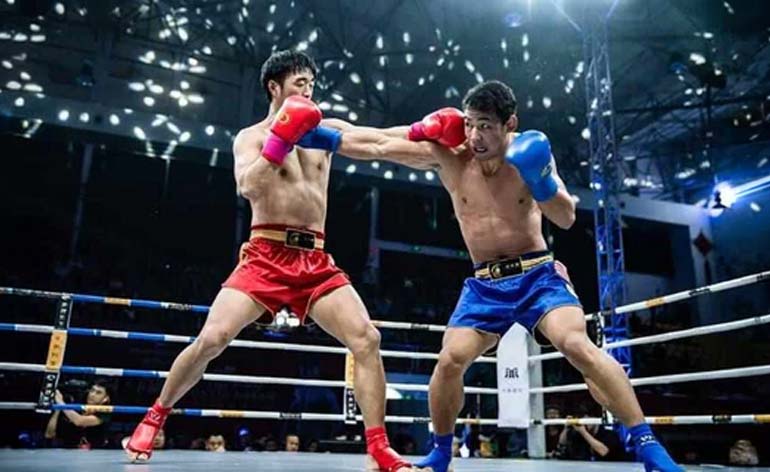
Sanda, also known as Chinese kickboxing, is emerging as one of the most effective transitional striking styles in MMA. As the sport continues to evolve, fighters and coaches are increasingly recognizing the value of systems that blend striking with grappling in a seamless, practical way—and Sanda fits that demand naturally.
What Is Sanda?
Sanda combines punches, kicks, sweeps, and throws — all under pressure. Unlike point-based traditional arts, it encourages live combat. Fighters train not just to land clean strikes, but to control distance, timing, and positioning against a fully resisting opponent. This makes Sanda more comparable to combat sports like Muay Thai or wrestling rather than traditional martial arts focused on forms or demonstrations. Its ruleset often rewards off-balancing techniques, ring control, and effective aggression, all of which translate well into modern MMA environments.
Why It Works in MMA
Sanda’s emphasis on striking-to-takedown transitions fits perfectly inside the cage. Fighters learn to disrupt balance and capitalize immediately. For example, a well-timed kick can be followed by a sweep, or a punch combination can flow directly into a body lock and throw. This fluidity allows Sanda practitioners to dictate where the fight takes place—standing, in the clinch, or on the ground. In MMA, where split-second decisions matter, this ability to chain techniques together gives Sanda fighters a strategic edge.
Another key advantage is its focus on explosiveness and recovery. Since Sanda matches often involve rapid exchanges and resets, fighters develop the ability to quickly regain stance and composure after failed attacks or scrambles—an essential skill in MMA where chaos is constant.
Real-World Applications
Many Sanda athletes transition smoothly into MMA, demonstrating excellent control during scrambles and clinch exchanges. Their background in off-balancing opponents and executing throws from striking setups often surprises fighters who are used to more conventional takedown entries. In the clinch, Sanda practitioners are comfortable using trips, reaps, and hip throws, making them dangerous in close quarters.
Additionally, their striking tends to be efficient and purposeful. Rather than relying solely on volume, Sanda fighters often strike with the intent to create openings for control or takedowns. This makes their offense less predictable and more adaptable in high-level competition.
Training and Adaptability
One of Sanda’s strengths is how easily it integrates with other disciplines. Fighters with a Sanda base can complement their skill set with Brazilian Jiu-Jitsu or wrestling, creating a well-rounded MMA game. The existing familiarity with takedowns and clinch work shortens the learning curve when transitioning to grappling-heavy training.
Moreover, Sanda’s emphasis on live sparring and practical application builds mental toughness. Fighters are conditioned to deal with pressure, unpredictability, and physical resistance from the start, which helps them adapt faster to the demands of professional MMA competition.
The Growing Influence of Sanda
As MMA evolves, Sanda’s influence is becoming harder to ignore. More fighters are incorporating its techniques into their training camps, and its principles are quietly shaping modern striking-grappling integration. While it may not yet be as globally recognized as other combat sports, its effectiveness speaks for itself inside the cage.
In a sport where adaptability and efficiency are key, Sanda offers a blueprint for blending striking and grappling into a cohesive, dynamic system—making it a valuable asset for the next generation of MMA fighters.